

Colleges anduniversitiesare failing our country.This seems to be the growing consensus among an increasingly large percentage ofAmericans and business leaders.
The recent Gallup and Lumina Foundationreportshows that an increasing number ofAmericans have little to no confidence in higher education.For the first time since Gallup begin to measure the confidence level in higher education,Americais “now nearly equally divided among those who have a great deal or quite a lot of confidence (36%), some confidence (32%), or little or no confidence (32%) in higher education.”
This finding represents a seismic shift from 2015, when almost 60% ofAmericans had a high level of confidence and 10% had little or none.
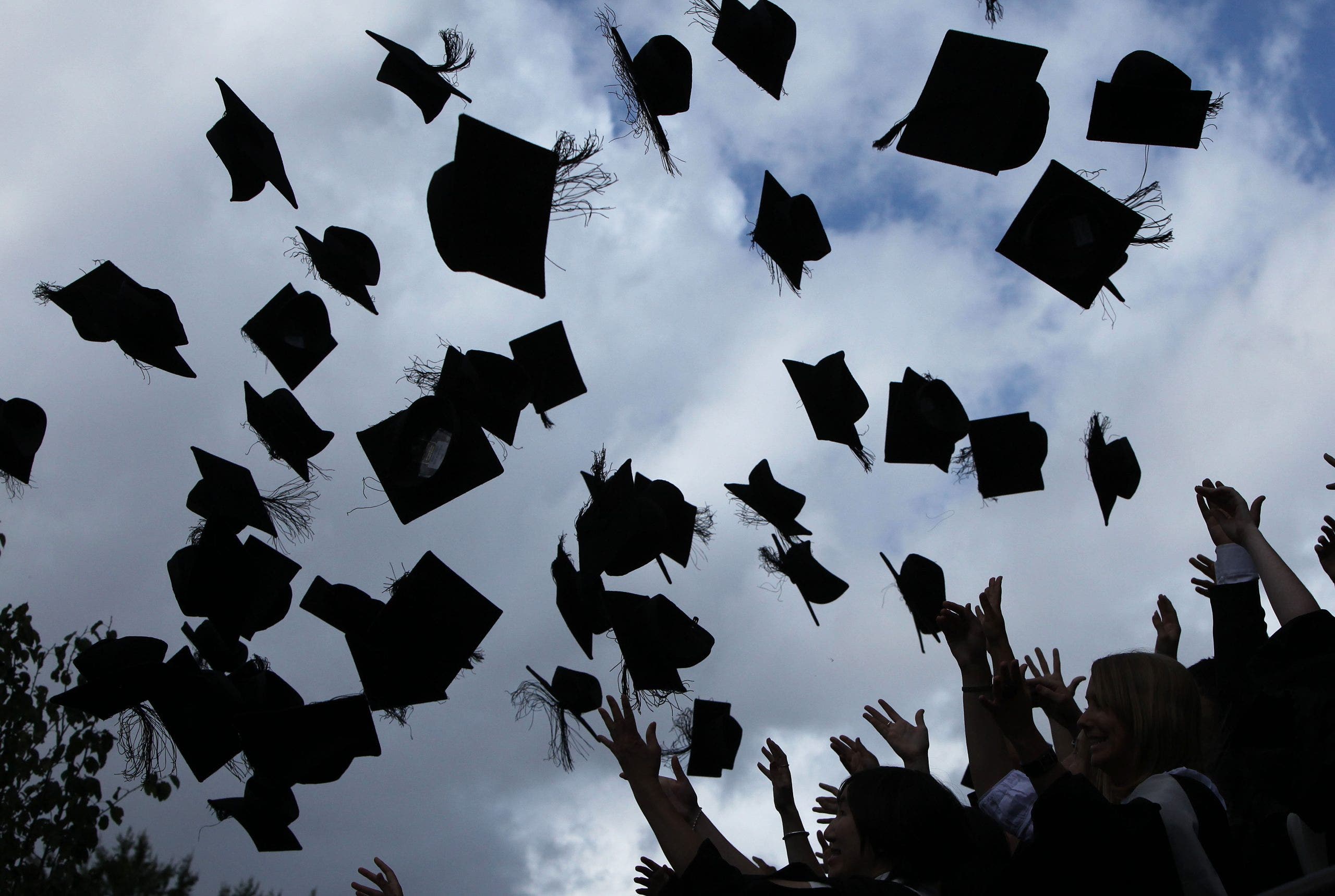
America is “now nearly equally divided among those who have a great deal or quite a lot of confidence (36%), some confidence (32%), or little or no confidence (32%) in higher education.” (Christopher Furlong/Getty Images)
Many business leaders equally reflect the growing lack of confidence. In a recent interview, Jamie Dimon, JPMorgan Chase CEO, criticized colleges anduniversitiesfor the little focus they place on helping graduates find good employment.
COLLEGES, CHAOS AND CASH: NO WONDER CONFIDENCE IN HIGHER EDUCATION TODAY IS SO LOW
This unwillingness, soarguesDimon,notonly places an exorbitant amount of pressure on businesses to train their employees – something pre-employment educationshoulddo – but also disenfranchises large sectors of society.
Kiersten Barnet, executive director of New York Jobs CEO Council – a group of 30 ofAmerica’s top CEOs and their companies – was perhaps more direct than Dimon,stating: “When you think about what you need to do a job, it isskills. It’snota degree.”
 Video
VideoAmerica’s growing doubts about colleges anduniversitiesare rooted in a list of causes too long to detail here, but it is worthnoting that the lack of confidence is connected to certain factors.The mostnotable of these being what colleges anduniversitiesteachand donotteach.
In Gallup’s report, of theAmericans who register little or no confidence, almost 40%, criticize colleges anduniversities”fornotteaching relevantskills, for college degreesnotmeaning much, or for graduatesnotbeing able to find employment.”
Indeed, anew survey released this week by Cengage Group found that 55% of recent graduates said their degree programs didnotprepare them for the workforce, with 70% saying basic AI trainingshouldbe taught.These are, in essence, the same concerns of business leaders like Dimon and Barnet.
 Video
VideoGallup’s report goes a step further, however.Slightly over 40% ofAmericans in this same low to no confidence groupthink that our colleges anduniversities”are pushing certain political agendas.”In short, many believe that higher education is miseducating our students.Rather than preparing for careers and a productive life, colleges anduniversitiesappear to be preparing students to be radical activists.
Further, the miseducation of our students as it relates to gainful employment – “good jobs” – is a serious problem since it robs from our students the opportunity for a fuller humanity.Jobs and compensation are essential for our humanity. But good jobs and good compensation are even more essential for a flourishing humanity and, by extension, a flourishing society.
COLUMBIA PROFESSOR TOLD STUDENTS TO AVOID MAINSTREAM MEDIA BECAUSE ‘IT IS OWNED BY JEWS:’ REPORT
Amid its many laudable goals, higher education must focus on preparing students for good jobs and compensation.To do any less is to perpetrate a great injustice on our students and our future.
 Video
VideoWhen students are miseducated to become radical activists, the injustice perpetrated is even greater and the damage is even more corrosive.Students are duped into believing that radicalactivismadds value to their own life and to society when in fact it is the opposite.Such pursuits rob from students the exercise of their productive full potential, thus undermining their good as well as that of all society.
To re-ignite public and business confidence in their work, colleges anduniversitiesmust have a singular focus on preparing students for meaningful jobs and careers.This begins with implementing industry-readyskills-based educational outcomes for their general education curriculum and all academic majors.
Colleges anduniversitiesshouldalso require internships or apprenticeships for the honing of soft and industry-specificsskillsas well as to create employment opportunities. And colleges anduniversitiesshouldrequire all academic departments to have industry and business partnerships for the continual refinement of curricula and preparation of students for themarket.
 Video
VideoWhile there may be additionalmarket-related refinements that could be implemented, there is no doubt that the above initiatives would go a long way to re-igniting our confidence in higher education.
The focus on jobs andmarketpreparation must also consider and integrate the enduring questions and answers to what it means to be human. This is what the humanities used to address.
Today, much of the humanities are characterized by a turn toward acontrarianismand deconstructionism that emphasize moral ambiguity and skepticism.Such an approach has resulted in generations of students who at best are sophisticated critics and at worst are radical activists. These students are too often unable to discern, affirm and defend truth and what it means to be human.
 Video
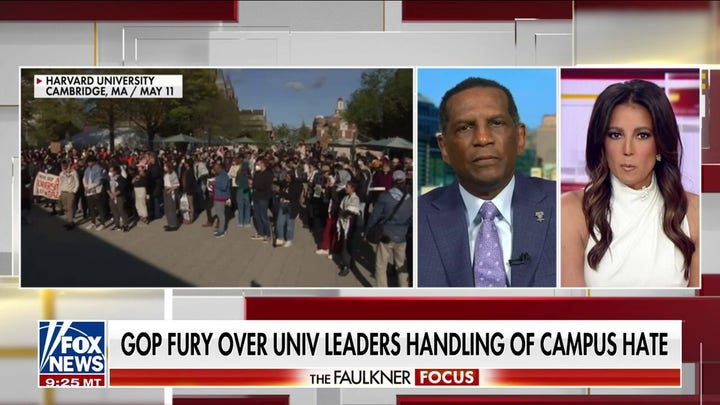
VideoA case in point are the recent protests in which students were clearly unable to discern good from evil. Some college presidents also fared no better.
Colleges anduniversitiesmust develop and implement moralskillseducational outcomes for their general education curriculum and all academic majors that prepareallstudents to discern and affirm what is true, beautiful and good.
All studentsshouldalso have a significant service requirement during each year of college that is a prerequisite for graduation. This service requirement would be connected to the moralskillsoutcomes allowing students to apply and refine their moral reasoning and judgment in preparation for life beyond college.
 Video
VideoCLICK HERE FOR MORE FOX NEWS OPINION
Our colleges anduniversitiesmust educate students with industryskillsthat position them for greatmarketcontributions. This education must also include moralskillsthat position our students for living a great life characterized by truth, beauty and goodness.
Both industry and moralskillsare essential for our students and for the future of our country, and a serious focus on these would go a long way in re-igniting the confidence inAmerica’s colleges anduniversities.
Gerson Moreno-Riaño, Ph.D., is president of Cornerstone University in Grand Rapids, Michigan.
Leave a Reply